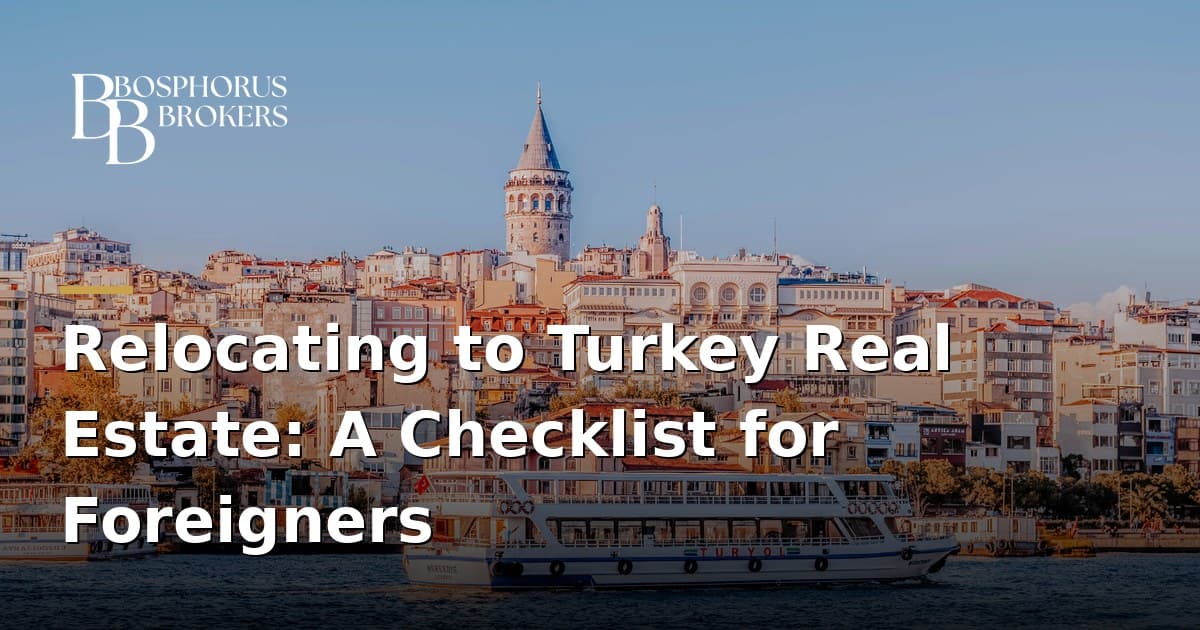
Relocating to Turkey involves far more than booking a flight and packing boxes. For most foreigners, the property decision sits at the centre of the move, which is why relocating to Turkey real estate planning should begin months before you land. This checklist walks you through what to arrange and in what order, from choosing a city to transferring the title deed, so nothing important is left to the last minute.
Relocating to Turkey Real Estate: The Big Picture
Relocating to Turkey real estate decisions shape almost everything else about your move, from your budget to your residence permit. Before you open a single listing, get clear on three things: your total budget including one-off costs, whether you want to rent or buy in your first year, and which region fits your work, family and lifestyle. Foreigners from most countries can buy property in Turkey, subject to a short list of nationality restrictions and a cap on the total land area a single foreign national may own. A real estate checklist for foreigners in Turkey should always start with these fundamentals, because every later step depends on them.
In our experience advising foreign buyers, the people who settle in most smoothly are the ones who separate two questions: where to live, and what to own. You do not have to buy immediately. Many clients rent for six to twelve months, learn the city through daily life, then commit to a purchase once they know which neighbourhood genuinely suits them.
Rent First or Buy Straight Away?
There is no single right answer: renting first suits people still choosing a city, while buying straight away suits those who already know where they want to settle. Renting buys you time and flexibility, and it lets you test a neighbourhood through the daily commute, the noise, the shops and the light at different hours. Buying gives you a fixed housing cost, a long-term base, and, above a set investment threshold, a possible route to Turkish citizenship. If you are still weighing how to buy property in Turkey against a simple lease, the table below sets out the main trade-offs.
| Factor | Renting first | Buying straight away |
|---|---|---|
| Flexibility | High, you can move on when the lease ends | Lower, reselling takes time and cost |
| Upfront outlay | Deposit plus one or two months rent | Full price plus taxes and transaction fees |
| Residence permit | Short-term permit tied to a registered lease | Permit supported by property ownership |
| Citizenship route | Not available through renting | Possible above the investment threshold |
A sensible middle path, and one we often suggest, is to rent a modest flat for the first few months while you research the market, then buy once you understand real prices in the area you have chosen. That way the biggest financial decision of your move is made with local knowledge rather than holiday impressions.
Choosing the Right City and Neighbourhood
The right location depends on why you are moving, so match the city to your daily life rather than to a brochure. Istanbul offers the widest job market, the busiest international community and the deepest property market, from historic apartments on the European side to new-build complexes in Asian districts. Antalya and Fethiye suit people who want a warmer, slower coastal life, and both have large established foreign communities. Izmir blends a big-city economy with an Aegean pace. Bodrum draws lifestyle buyers and holiday-home owners, while Ankara appeals to those tied to the capital for work or study. A useful part of any moving to Turkey relocation checklist is to spend at least a few days in each shortlisted district before you sign anything.
Within a city, walk the specific neighbourhood at different times, check the commute to your work or your children's school, and ask about earthquake-resilient construction, since building age and quality vary widely. These local details rarely show up online, and they are exactly where a broker who knows the ground can save you from an expensive mistake.
Your Relocating to Turkey Real Estate Checklist
The core relocating to Turkey real estate checklist below sets out the practical steps in the order most foreigners need them. It is the real estate checklist for foreigners in Turkey that we walk clients through most often. Treat it as a sequence, because several items unlock the ones after them.
- Obtain a Turkish tax number, which is free and available from the Turkish Revenue Administration or online through the e-Devlet portal.
- Open a Turkish bank account, which you will need for the purchase, utilities and, later, your residence permit.
- Set your true budget, adding roughly six to ten percent on top of the price for taxes, fees and moving costs.
- Shortlist properties and view them in person, or through a representative you trust if you cannot travel yet.
- Commission the mandatory property valuation report before agreeing a final price.
- Run title deed checks to confirm the seller's ownership and that the property carries no debts or restrictions.
- Agree the price and the payment terms in writing.
- Arrange compulsory earthquake insurance (DASK) for the property.
- Complete the title deed (TAPU) transfer at the Land Registry (Tapu ve Kadastro).
- Register the utilities in your name and complete your address registration.
- Apply for your residence permit once the home is secured.
If travelling for every step is impractical, a limited power of attorney lets a trusted representative act for you on specific tasks, which many foreign buyers use to keep the move on schedule.
Buying Property in Turkey as a Foreigner: The Process Step by Step
Buying property in Turkey as a foreigner follows a defined sequence overseen by the Land Registry, so the process is more predictable than many newcomers expect. It starts with a Turkish tax number and a local bank account, both of which are straightforward to obtain. A property valuation report from a licensed appraiser is compulsory for foreign buyers and sets an official market value for the transaction. Once the paperwork is ready, both parties, or their representatives, attend the Tapu office, where the title deed is transferred and the balance is paid. The whole transfer, once documents are in order, often takes only a few weeks.
Two points reward attention. First, if you bring the purchase funds from abroad and pay in foreign currency, you may qualify for a value added tax exemption on a first residential purchase, provided you hold the property for the required period, a rule worth confirming with an advisor as it changes from time to time. Second, buyers who invest at or above the citizenship threshold, which stands at 400,000 US dollars as of the time this article is written, can pursue Turkish citizenship through the same purchase. Understanding how to buy property in Turkey correctly at this stage protects both the tax benefit and any future citizenship application.
Costs, Taxes and Fees to Budget For
Beyond the purchase price, plan for roughly six to ten percent in one-off costs, so a home is never priced by its headline figure alone. The largest single item is usually the title deed transfer fee, around four percent of the declared value as of the time this article is written, which buyer and seller sometimes share by agreement. On top of that sit the valuation report fee, notary and sworn-translation charges, the DASK earthquake insurance premium, and agency commission, which is typically up to two percent plus value added tax. After purchase, an annual property tax applies at a modest rate that depends on the property type and location. Because these figures change with the budget and local rules, confirm the current numbers with an advisor before you commit.
Residence Permits and Living in Turkey
Your home and your right to stay are closely linked, because a registered lease or property ownership is one of the grounds for a short-term residence permit issued by the Directorate General of Migration Management. To apply, you generally need a valid passport, your tax number, private health insurance, proof of address and the supporting property or tenancy document. Registering your address with the authorities and setting up your utilities are part of the same settling-in phase, and doing them promptly keeps your permit file clean. A complete moving to Turkey relocation checklist therefore treats the property, the permit and the everyday admin as one connected project rather than separate errands.
In our experience advising foreign clients, delays usually come from missing paperwork rather than from any single hard rule, so gathering documents early is the simplest way to keep a move on track. Once you are settled, the same property can support permit renewals and, where the investment qualifies, a citizenship application.
Relocating to Turkey real estate planning rewards people who work through it in order: budget first, then city, then rent-or-buy, then the purchase, the costs and the permit. Handle each item on the checklist in sequence and the move stops feeling like a leap and starts feeling like a plan.
Looking to Buy, Rent, or Invest in Property in Turkey?
Bosphorus Brokers is an Istanbul-based licensed real estate brokerage that has helped foreigners buy, rent, manage and invest in property across Turkey. To discuss your own plans, reach us by phone or WhatsApp at +90 533 140 04 96, or visit us at Merkez Mahallesi Hasat Sokak No:12/2, 34384 Şişli, İstanbul. Contact us for more information.
Frequently Asked Questions
Where should I start with relocating to Turkey real estate?
Start with your budget, your city and the rent-or-buy decision, in that order. These three fundamentals shape everything that follows, from the neighbourhoods you view to the residence permit you eventually apply for. Settle them first and the rest of the checklist falls into place.
Can foreigners buy property in Turkey?
Yes, foreigners from most countries can buy property in Turkey. There is a short list of nationality restrictions and a cap on the total land area a single foreign national may own, but for the great majority of buyers the purchase is straightforward once a tax number, a bank account and a valuation report are in place.
How do I buy property in Turkey as a foreigner?
Buying property in Turkey as a foreigner runs through the Land Registry in a set order: get a tax number, open a bank account, obtain the compulsory valuation report, agree terms, arrange DASK insurance, and complete the title deed transfer at the Tapu office. The transfer itself often takes only a few weeks once documents are ready.
Should I rent or buy when I first move to Turkey?
Rent first if you are still choosing a city, and buy once you know exactly where you want to settle. Renting gives you flexibility and time to learn a neighbourhood, while buying gives you a fixed base and, above the investment threshold, a route to Turkish citizenship. Many foreigners rent for six to twelve months, then purchase.
What extra costs come with buying a home in Turkey?
Budget roughly six to ten percent above the price for one-off costs. These include the title deed transfer fee of around four percent of the declared value, the valuation report, notary and translation charges, DASK earthquake insurance and agency commission. These figures are accurate as of the time this article is written and should be confirmed with an advisor.
Does buying property give me the right to live in Turkey?
Property ownership is one of the grounds for a short-term residence permit issued by the Directorate General of Migration Management, and above the qualifying investment it can also support a citizenship application. You still need a valid passport, a tax number, health insurance and proof of address to complete the residence permit process.
About Bosphorus Brokers
Bosphorus Brokers is an Istanbul-based licensed real estate brokerage specialising in property sales, rentals, management and investment for foreigners in Turkey. We guide international clients in several languages through property search, negotiation, title deed transfer, notary procedures and after-sale management, working across Istanbul, Antalya, Bodrum, Fethiye, Izmir and Ankara. Bosphorus Brokers is run by Burak Ünal, its founder and licensed real estate broker (Taşınmaz Ticareti Bilgi Sistemi, Real Estate License No. 3408704), who holds an MSc in Finance from the London School of Economics and a BBA from Boğaziçi University. We focus on clear, responsive and professional guidance at every step.
Disclaimer: This article is for general informational purposes only and you are strongly advised to consult a professional to evaluate your personal situation. No liability is accepted that may arise from the use of the information in this article.
Citizenship by investment
Every route to a Turkish passport, compared: property, bank deposit, government bonds and the private pension system.
Frequently asked questions
- Can foreigners buy property in Turkey?
- Yes, foreigners from most countries can buy property in Turkey. There is a short list of nationality restrictions and a cap on the total land area a single foreign national may own, but for the great majority of buyers the purchase is straightforward once a tax number, a bank account and a valuation report are in place.
- How do I buy property in Turkey as a foreigner?
- Buying property in Turkey as a foreigner runs through the Land Registry in a set order: get a tax number, open a bank account, obtain the compulsory valuation report, agree terms, arrange DASK insurance, and complete the title deed transfer at the Tapu office. The transfer itself often takes only a few weeks once documents are ready.
- Should I rent or buy when I first move to Turkey?
- Rent first if you are still choosing a city, and buy once you know exactly where you want to settle. Renting gives you flexibility and time to learn a neighbourhood, while buying gives you a fixed base and, above the investment threshold, a route to Turkish citizenship. Many foreigners rent for six to twelve months, then purchase.
- What extra costs come with buying a home in Turkey?
- Budget roughly six to ten percent above the price for one-off costs. These include the title deed transfer fee of around four percent of the declared value, the valuation report, notary and translation charges, DASK earthquake insurance and agency commission. These figures are accurate as of the time this article is written and should be confirmed with an advisor.
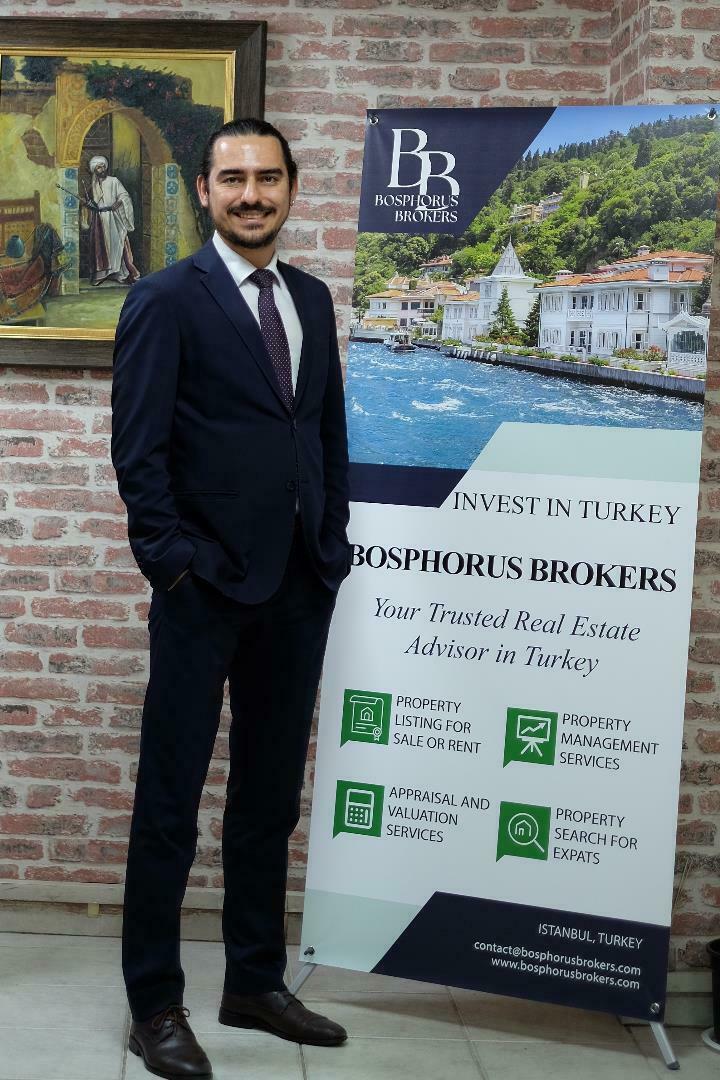
Written by
Burak Ünal
Turkish Real Estate Broker - License no. 3408704
Burak Ünal is a licensed real estate broker in Turkey (license no. 3408704) who advises Turkish and international clients on buying, selling and renting property and on Turkish citizenship by investment. He holds an MSc in Finance from the London School of Economics (2019) and a BSc in Business Management from Boğaziçi University (2016), and passed Turkey's official real estate broker licensing exam in 2021. A Chevening scholar and a Congress Member of Galatasaray Sports Club, he advises clients in English (IELTS 8.0), Turkish and French.