Buying property in Turkey for Russians is fully lawful as of the time this article is written. Russian citizens can buy a home in their own name, register it at the Land Registry and Cadastre (Tapu Kadastro) and hold it with the same rights as other foreign owners. The part that needs planning is the money: transfers from Russia face extra bank compliance checks, so the payment route should be settled before you commit.
This guide covers eligibility, documents, the title deed steps, costs, payment, and the USD 200,000 residence permit and USD 400,000 citizenship thresholds.
We are Bosphorus Brokers, a licensed real estate brokerage in Istanbul, and our office has a Russian-speaking translator, so the questions below come up regularly in our work. Every figure here should be confirmed with the relevant authority, because Turkish property and residence rules change often.
Can Russians Buy Property in Turkey?
Yes, Russian citizens can buy residential and commercial property in Turkey in their own name. Foreign ownership is governed by Article 35 of the Land Registry Law (Tapu Kanunu), and Russia is among the countries whose citizens may acquire real estate, so the answer to "can Russians buy property in Turkey" has been the same for many years.
The limits that apply to every foreign buyer also apply to Russian citizens buying real estate in Turkey:
- A foreign individual may own up to 30 hectares of land across Turkey in total.
- Foreign ownership cannot exceed 10 percent of the private land area of any one district.
- Property inside military or strategic security zones cannot be sold to foreigners, and the Land Registry checks every foreign purchase against these zones before the transfer.
For an ordinary apartment in Istanbul or Antalya these checks are routine. They matter more for land, rural plots and sites near the coast or the borders, where clearance can take longer and occasionally ends in a refusal.
Buying Property in Turkey for Russians: Documents You Need
The documents for buying property in Turkey for Russians are short and standard: an international passport, a Turkish tax number, two recent photographs and, if you will not attend in person, a power of attorney.
Passport and translation
The Land Registry works from your international travel passport (zagranpasport), not the internal Russian passport. A notarised Turkish translation of the identity page is usually needed for the tax office, the bank and the notary. Your name must be spelled the same way on every document, because one transliteration difference between the passport, the tax record and the contract can stop an appointment.
Turkish tax number
A tax number (vergi numarası) is issued free of charge by the Turkish Revenue Administration (Gelir İdaresi Başkanlığı) at any tax office on presentation of your passport. It is needed for the bank account, the utilities and the title deed.
Power of attorney from Russia
If you buy remotely, you can sign a power of attorney at a Turkish consulate in Russia, or before a Russian notary followed by an apostille, since both Russia and Turkey are parties to the Hague Apostille Convention. A Russian document is then translated into Turkish by a sworn translator and notarised in Turkey. Registry offices also expect a recent photograph of the person granting the power of attorney to be attached. The text should clearly cover buying the property, paying the fees and signing at the Land Registry, because vague wording can lead a registry officer to refuse it.
The Title Deed Process for Russian Buyers, Step by Step
The title deed process for Russian buyers follows the same official sequence as for any foreign purchaser, and the transfer itself is usually completed on the day of the Land Registry appointment. The order runs like this:
- Agree the property and the price. You view in person or by video, we carry out market and price research on comparable sales, and we negotiate on your behalf under a written brokerage agreement.
- Check the property. Before any deposit, the title deed record is checked for mortgages, liens and annotations, and the occupancy permit (iskan) is reviewed. Your own independent lawyer can carry out a full due diligence review if you want one.
- Sign a preliminary agreement. It fixes the price, the deposit and the completion date.
- Order the valuation report. A valuation report is mandatory for sales to foreigners. It is prepared by an SPK-licensed valuation firm; we coordinate it but do not prepare it.
- Apply for the transfer. The application is made through the Land Registry's online system (Web Tapu) or at the registry office, which runs the security zone check.
- Insure, pay and sign. Compulsory earthquake insurance (DASK) must be in place, the title deed fee and the revolving fund fee are paid, and both parties or their attorneys sign before the registry officer. A sworn translator must attend if you do not speak Turkish.
- Move the utilities. Electricity, water and gas subscriptions are transferred into your name.
In our experience working with Russian-speaking buyers, the appointment itself is rarely the slow part; delays usually come from a passport translation that does not match the tax record, or from a valuation report that expired while the funds were still in transit. That is why we check the full file before an appointment is booked, and why the Russian-speaking translator at our Istanbul office reviews names and spellings early in the title deed process for Russian buyers.
Paying for Turkish Property from Russia
Paying for Turkish property from Russia is the step that needs the most preparation. International sanctions on several Russian banks and the compliance rules of Turkish banks both affect how money can move.
Turkish banks run their own source-of-funds checks on incoming transfers, and a payment can be held while the bank asks for the contract, account statements or proof of income.
These practical points apply to most Russian citizens buying real estate in Turkey:
- Open a Turkish bank account early. Banks decide case by case whether to open an account for a non-resident, and the documents they ask for vary.
- Keep the payment in the banking system. Cash leaves no clean record, raises customs declaration questions if it crossed a border, and can make a purchase unusable for a citizenship application.
- Match the paperwork. The amount, the payer's name and the stated purpose of the transfer should line up with the sales contract and the title deed.
- Ask your bank before you sign. Which currency and which route the bank will accept is its own decision, and it can change at short notice.
We help you keep the documents in order, but we do not give financial advice and we do not recommend a bank or a transfer route; those questions belong with your bank or an SPK-authorised institution. Confirming the payment route first, and only then signing a binding agreement with a deposit, protects you if a transfer is delayed.
Costs and Taxes When Buying Property in Turkey for Russians
The extra costs of buying property in Turkey for Russians usually add around 6 to 9 percent to the price as of the time this article is written, depending on who pays the title deed fee and whether VAT applies. The main items are:
- Title deed fee: 4 percent of the declared value, set at 2 percent each for buyer and seller, although the split is often negotiated.
- Revolving fund fee (döner sermaye): a fixed registry service charge updated each year.
- Valuation report: a professional fee paid to the SPK-licensed valuation firm.
- Translation and notary: the sworn translator at the appointment, the passport translation and any power of attorney.
- DASK: compulsory earthquake insurance, renewed every year.
- Brokerage commission: up to 2 percent plus VAT from the buyer and up to 2 percent plus VAT from the seller (4 percent plus VAT in total, the statutory cap), set out in the written brokerage agreement.
VAT on a new build
VAT is charged on the first sale of a new home by a developer. A non-resident foreign buyer can qualify for an exemption under Article 13(i) of the VAT Law when the price is paid in foreign currency brought in from abroad, and the exemption is lost if the property is sold within three years (Law No. 7394, in force since 1 May 2022). Confirm eligibility with the tax office before relying on it.
Annual and later taxes
Annual property tax (emlak vergisi) is billed by the municipality at a small fraction of a percent of the assessed value. Rental income from a Turkish property is taxable in Turkey, and a gain on a sale within five years of purchase is generally subject to Turkish income tax. Turkey and Russia have a double taxation agreement, and how it applies to your own position is a question for a tax professional in both countries.
Residence and Citizenship Through Turkish Property for Russian Buyers
Turkish property for Russian buyers can support two separate applications, a residence permit and Turkish citizenship, and each has its own threshold and conditions. Neither is automatic, and neither outcome is guaranteed.
| Route | Minimum property value | Key conditions |
|---|---|---|
| Short-term residence permit | USD 200,000 title-deed value (homes acquired on or after 16 October 2023) | The neighbourhood must be open to new residence permits; renewable while the conditions are met |
| Citizenship by investment | USD 400,000 | Held for 3 years, noted on the title deed; typically 8 to 12 months end to end, not guaranteed |
Residence permit
As of the time this article is written, the USD 200,000 minimum applies in Istanbul and, since 16 October 2023, everywhere in Turkey; the older USD 75,000 and USD 50,000 tiers no longer apply. Applications go to the Directorate General of Migration Management (Göç İdaresi), and some neighbourhoods are closed to new residence permits for foreigners, so check the exact address before you buy. Russian citizens can enter Turkey visa-free for short stays, which makes viewing trips simple, but a visit does not replace a permit if you plan to live there.
Citizenship
Under Article 20 of the Citizenship Regulation, the real estate route requires property worth at least USD 400,000, held for three years, with that commitment noted on the title deed. The foreign currency is converted through a Turkish bank and recorded on a Currency Purchase Document (Döviz Alım Belgesi), and property previously owned by a foreigner generally does not qualify.
The same article sets out the other routes: USD 500,000 in a deposit, government debt instruments, fund units, BES or fixed capital, or employment for 50 people. We explain these official conditions and coordinate the procedural steps for the real estate route; we do not recommend one route over another, and the choice is yours.
A complete file typically takes 8 to 12 months end to end, though no official processing time is published and the outcome is not guaranteed. Russian law also requires citizens who acquire a second citizenship to notify the Russian authorities, so check the current rules with them.
Where Russian Buyers Look in Turkey
Antalya province and Istanbul are where Russian buyers are most active, and Russian citizens have ranked among the leading foreign buyer nationalities in the Turkish Statistical Institute (TÜİK) housing sales data in recent years.
- Antalya and Alanya: a coastal lifestyle, a large Russian-speaking community and direct flights from Russian cities. Several Antalya neighbourhoods are closed to new residence permits, so the address check matters most here.
- Istanbul: a year-round city with schools, hospitals, an international business base and a deep resale market. We are based in Şişli and work on both the European and Asian sides.
- Fethiye, Bodrum and Izmir: quieter Aegean and Mediterranean settings for buyers who want a smaller town.
Wherever you look, Turkish property for Russian buyers should be judged on recent comparable sales rather than asking prices. Whether a purchase suits you as a home or as an investment is your decision, and investment advice comes from SPK-authorised institutions.
Common Mistakes Russian Buyers Can Avoid
Most problems Russian buyers meet in Turkey come from doing the right steps in the wrong order. The ones we see most often are:
- Paying a deposit before the payment route from Russia is confirmed.
- Buying in a neighbourhood closed to new residence permits when the permit is the main goal.
- Accepting a declared title deed value below the real price, which creates tax exposure and can undermine a residence or citizenship file.
- Signing a Turkish contract without a sworn translation into Russian.
- Assuming an off-plan project will finish on the promised date without checking the developer's permits.
Buying property in Turkey for Russians comes down to three things done in the right order: confirm the payment route, check the property and its address, and prepare the documents before the Land Registry appointment. The ownership rules are clear, the transfer is quick once the file is complete, and the residence and citizenship thresholds are set by regulation, not promised by any broker.
Looking to Buy, Sell or Rent Property in Turkey?
Bosphorus Brokers is a licensed real estate brokerage in Istanbul that helps foreigners buy, sell, rent and manage property across Turkey. To discuss your plans, reach us by phone or WhatsApp at +90 539 415 31 39, or visit us at Merkez Mahallesi Hasat Sokak No:12A, 34384 Şişli, İstanbul. Contact us for more information.
Frequently Asked Questions
Can Russians buy property in Turkey in 2026?
Yes, Russian citizens can buy property in Turkey in their own name as of the time this article is written. The limits are the same as for other foreigners: 30 hectares per person nationwide, 10 percent of any district, and no purchases inside military or security zones.
Do I need to be in Turkey for the title deed process for Russian buyers?
No, you can complete the purchase through a representative holding a power of attorney. You sign it at a Turkish consulate in Russia, or before a Russian notary with an apostille, and it is then translated into Turkish by a sworn translator.
How much does buying property in Turkey for Russians cost on top of the price?
Extra costs usually come to around 6 to 9 percent of the price as of the time this article is written. They include the 4 percent title deed fee, the valuation report, translation and notary fees, DASK insurance, possible VAT on a new build and brokerage commission of up to 2 percent plus VAT from each party.
Can I pay for Turkish property from a Russian bank account?
It depends on the banks involved, because sanctions on several Russian banks and Turkish banks' own compliance checks affect which transfers are accepted. Confirm the route with your bank before you sign a binding agreement or pay a deposit.
Does buying a home give Russians a Turkish residence permit?
A home with a title-deed value of at least USD 200,000, acquired on or after 16 October 2023, can support a short-term residence permit application. The neighbourhood must be open to new permits, and the permit is not automatic.
Can Russians get Turkish citizenship by buying property?
The real estate route requires property worth at least USD 400,000, held for three years, under Article 20 of the Citizenship Regulation. A complete file typically takes 8 to 12 months end to end, and neither the timeline nor the outcome is guaranteed.
About Bosphorus Brokers
Bosphorus Brokers is a licensed real estate brokerage in Istanbul, operated by Burak Ünal through his registered sole proprietorship (Ministry of Trade authorisation no. 3408704). Under a written brokerage agreement, we help foreign buyers, sellers, landlords and tenants with property search, viewings, market and price research, negotiation, buyer and seller representation, title deed coordination, leasing and property management across Istanbul, Antalya, Bodrum, Fethiye, Izmir and Ankara, including purchases made for the real estate route to Turkish citizenship. We are not authorised by the Capital Markets Board (SPK) to give investment advice, we do not prepare valuation reports (SPK-licensed valuation firms do), and we do not guarantee rental income, price growth or any citizenship or residence outcome.
Disclaimer: This article is for general informational purposes only and you are strongly advised to consult a professional to evaluate your personal situation. No liability is accepted that may arise from the use of the information in this article.
Citizenship by investment
Every route to a Turkish passport, compared: property, bank deposit, government bonds and the private pension system.
Frequently asked questions
- Can Russians buy property in Turkey in 2026?
- Yes, Russian citizens can buy property in Turkey in their own name as of the time this article is written. The limits are the same as for other foreigners: 30 hectares per person nationwide, 10 percent of any district, and no purchases inside military or security zones.
- How much does buying property in Turkey for Russians cost on top of the price?
- Extra costs usually come to around 6 to 9 percent of the price as of the time this article is written. They include the 4 percent title deed fee, the valuation report, translation and notary fees, DASK insurance, possible VAT on a new build and brokerage commission of up to 2 percent plus VAT from each party.
- Can I pay for Turkish property from a Russian bank account?
- It depends on the banks involved, because sanctions on several Russian banks and Turkish banks' own compliance checks affect which transfers are accepted. Confirm the route with your bank before you sign a binding agreement or pay a deposit.
- Can Russians get Turkish citizenship by buying property?
- The real estate route requires property worth at least USD 400,000, held for three years, under Article 20 of the Citizenship Regulation. A complete file typically takes 8 to 12 months end to end, and neither the timeline nor the outcome is guaranteed.
Written by
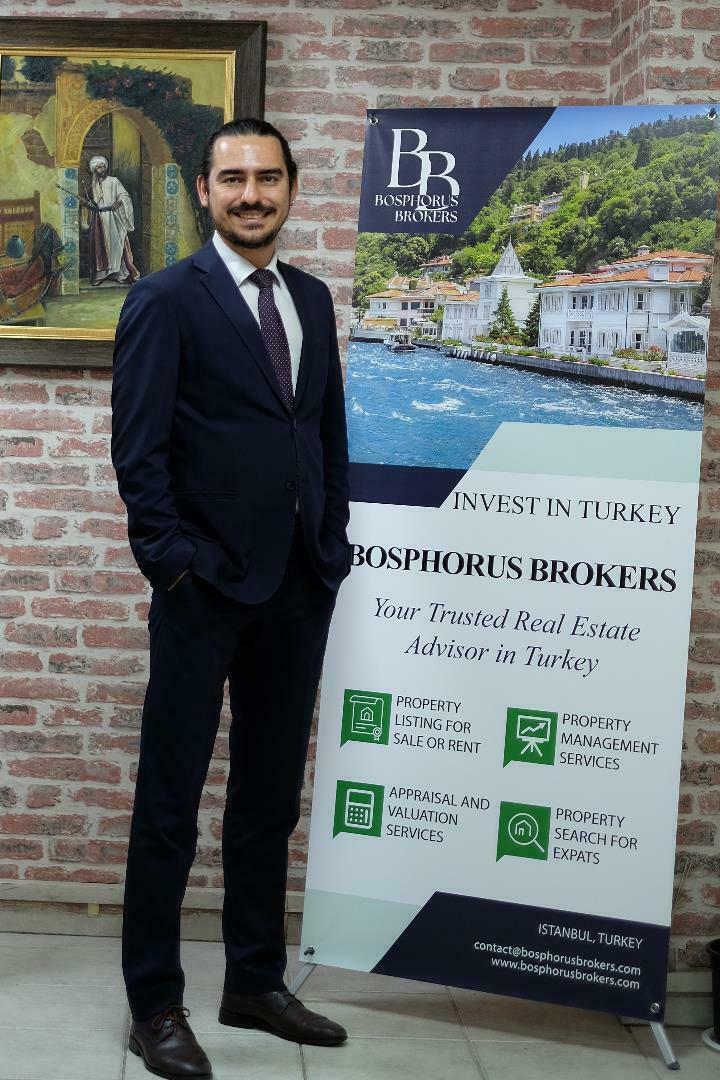
Burak Ünal
Turkish Real Estate Broker - License no. 3408704
Burak Ünal is a licensed real estate broker in Turkey (license no. 3408704) who advises Turkish and international clients on buying, selling and renting property, including property purchases for Turkish citizenship by investment, through his registered sole proprietorship trading as Bosphorus Brokers. He holds an MSc in Finance from the London School of Economics (2019) and a BSc in Business Management from Boğaziçi University (2016), and passed Turkey's official real estate broker licensing exam in 2021. A Chevening scholar and a Congress Member of Galatasaray Sports Club, he advises clients in English (IELTS 8.0), Turkish and French.