Quick answer
Foreigners can buy property in Fethiye in their own name, following Turkey's national process: tax number, bank account, SPK-licensed valuation, currency conversion and land registry signature. In Fethiye the key checks are the Fethiye-Göcek protection area, protected sites, the coastal line and villa titles. Costs on a resale usually add about 4.5% to 7%.
Key takeaways
- Foreigners can buy flats, villas and land in Fethiye in their own name, outside military zones and within area caps.
- Muğla, Fethiye's province, sells far fewer homes to foreigners than Istanbul or Antalya (TÜİK), so most resale buyers are Turkish.
- Much of Fethiye and Göcek lies in the Fethiye-Göcek Special Environmental Protection Area, which shapes plans and building permits.
- Check whether a house has its own building plot and title, or stands on a field or a share of a plot (hisseli tapu).
- On a resale, buying costs usually add about 4.5% to 7%; most new builds also carry VAT unless you qualify for the exemption.
- Holiday lets of up to 100 days need a Law No. 7464 permit and, in shared sites, every other owner's consent.

Yes. As a foreigner you can buy property in Fethiye in your own name, with the title deed (tapu) registered to you at the land registry. The steps are the same as anywhere in Turkey: tax number, bank account, official valuation, currency conversion and signature. Fethiye's own checks concern protected areas, building permits and villa titles.
This guide covers who can buy, where to look, the steps, costs, residence rules, holiday lets and the checks that protect you. Bosphorus Brokers, the licensed brokerage of Burak Ünal (Ministry of Trade authorisation no. 3408704), acts for buyers in Fethiye from Istanbul, with viewings in person or by live video. Rules change, so confirm each point before you pay.
Can foreigners buy property in Fethiye?
Yes. Fethiye, a district of Muğla province on the south-west coast, follows the national rules of Land Registry Law No. 2644, Article 35: nationals of the countries approved by presidential decision can buy flats, villas and land in their own name. You do not need a residence permit to buy. The limits:
- Military and security zones are closed to foreigners. The land registry checks every foreign purchase against them, which can take longer outside town centres.
- Area caps: foreigners together may own no more than 10% of a district's private land, and each person no more than 30 hectares in Turkey.
- Nationality: citizens of a few countries cannot buy in their own name, so confirm yours before paying a deposit.
- Land: a foreign buyer of undeveloped land must submit a project for it within two years.
Our guide to how to buy property in Turkey as a foreigner covers the national rules in detail.
How many foreigners buy property in Fethiye?
Fethiye has long had foreign residents, but foreign buyers are a small share of the market. TÜİK's provincial figures put Muğla, which includes Bodrum and Fethiye, far below Istanbul and Antalya in sales to foreigners. Antalya province, by comparison, recorded 7,118 in the whole of 2025 (TÜİK, Housing Sales Statistics, December 2025).
Most buyers in Fethiye are Turkish, so prices follow the domestic market and your eventual buyer will most likely be Turkish too. A home with a clean title, an occupancy permit and year-round appeal resells more easily than one that only works in July and August.
Where should you buy in and around Fethiye?
Fethiye is a working town on a sheltered bay, with beach and hillside areas around it and Dalaman Airport within about an hour's drive. Prices and building rules differ from one area to the next, so compare recent sales in the exact neighbourhood.
| Area | What it is like | What to check |
|---|---|---|
| Çalış | A flat seafront area north of the town, with a long beach and promenade; year-round and holiday homes | The age and management of older holiday complexes, and service charges |
| Fethiye town and Karagözler | The town centre and marina, and the hillside above the bay, with services all year | Building age and structure, steep access and parking |
| Hisarönü and Ovacık | Resort villages on the hill above Ölüdeniz, with villas and complexes with shared pools; busy summers, quiet winters | The type of title, the site management and the position on holiday lets |
| Ölüdeniz | The lagoon and beach, which are protected, so little new building happens there | Protected-area rules on any house near the lagoon |
| Üzümlü and the inland villages | Larger plots and detached houses in cooler hills; a car is essential | Whether the plot is zoned for building, the building licence and road access |
| Göcek | A marina village west of Fethiye, oriented to sailing | Protection-area rules on building and extensions |
| Kayaköy | A valley around an abandoned Greek village protected as a historic site | Conservation rules on any house or plot nearby |
If you are comparing coasts, our guide to buying property in Bodrum covers the same province's Aegean peninsula.
What is different about buying property in Fethiye?
- The Special Environmental Protection Area. Much of Fethiye and Göcek lies inside the Fethiye-Göcek Special Environmental Protection Area, declared in 1988, where plans and building permits follow rules set at ministry level. Ask which plan applies to your plot.
- Protected sites. Kayaköy, the Ölüdeniz lagoon and the ancient remains in and around the town are protected; works near them can need conservation board approval.
- The coast. Coastal Law No. 3621 keeps the shore open to the public and restricts building in the strip behind it, so check a seafront plot against the approved shore line.
- Village houses and shared plots. Some houses stand on land registered as a field, or on a share of a larger plot (hisseli tapu), rather than on a building plot with their own title. A share gives you a fraction of the land, not a defined house.
- Earthquake and building age. Fethiye was largely rebuilt after the 1957 earthquake, and the whole coast is seismically active. Ask for the building licence date and, for an older house, have a structural engineer look at it.
- New villas sold off-plan. Check the building licence, the developer's delivered projects and the contract's protections; our guide to off-plan vs ready property explains them.
How do you buy property in Fethiye, step by step?
- Set your goal and full budget, including the buying costs below and, on most new builds, VAT.
- Shortlist and view in person or by live video and, if you can, visit once in winter as well as in summer.
- Run the checks before any deposit: the title deed record, the zoning status, any protected-area status, the occupancy permit and, for a house, the plot boundaries against the cadastral map.
- Agree the terms in writing: price, currency, payment dates, what is included, who pays which costs and when the deposit is refunded. Have an independent lawyer review them; a promise-to-sell contract must be signed at a notary to be enforceable.
- Get a tax number and open a bank account. A tax office usually issues the number the same day on your passport.
- Order the valuation report from a company licensed by the Capital Markets Board (SPK). It is required when the buyer is a foreigner, and the declared price should not be below it.
- Convert the price at a Turkish bank and obtain the foreign currency purchase certificate (döviz alım belgesi, DAB).
- Pay the fees and sign. Pay the title deed and revolving-fund fees, have a valid DASK policy (compulsory earthquake insurance) and sign at the land registry, with a sworn translator if you do not speak Turkish. The title is registered in your name the same day.
- Settle in: move the utilities into your name, register for the site service charge (aidat) and check that the municipality has recorded you for property tax.
You need not stay for all of this: a power of attorney signed at a Turkish consulate, or at a notary abroad with an apostille, lets a representative complete each step. From 1 December 2026, sales paid by bank transfer or cash are due to pass through a new secure payment system that holds the buyer's money until the title is registered.
What does it cost to buy property in Fethiye?
| Cost | Amount | Notes |
|---|---|---|
| Title deed fee (tapu harcı) | 4% of the declared price | By law 2% from each side; developers often ask the buyer to pay all of it, so agree the split in writing |
| VAT on a new build | For building licences from April 2022, 10% on the first 150 m² of net area, 20% above | Non-resident foreign buyers paying with currency brought from abroad can be exempt if they do not sell within three years; private resales generally carry none |
| Valuation report | A minimum tariff set each year | Required for foreign buyers; paid by the buyer |
| Brokerage fee | Up to 2% of the price + VAT from each party | Legal cap 4% + VAT in total; ours is payable at the title deed transfer |
| Revolving-fund fee, DASK, translation, notary, utilities | Small fixed amounts | Depend on the documents and the building |
On a resale bought through a broker, these usually add about 4.5% to 7% to the price; our guide to the cost of buying property in Turkey works through an example with the current lira amounts. Once you own, you pay annual property tax (0.2% of the tax value for a home in a metropolitan municipality such as Muğla), the service charge and the DASK renewal, and a gain on a sale within five years of buying can be taxable.
Can buying in Fethiye get you a residence permit or citizenship?
Residence permit. A home can support a short-term residence permit if its title deed value at purchase was at least USD 200,000 (at the Central Bank rate that day), you live in it rather than let it, and the address is open to new foreign registrations. Neighbourhoods with many foreign residents can be closed, and the list changes, so check the address with the Muğla provincial migration office (İl Göç İdaresi) before you reserve. Our residence permit guide lists the documents.
Citizenship. The property must be worth at least USD 400,000 by official valuation, be kept for three years with an annotation on the title deed, and not be bought from a foreign seller; our citizenship by investment guide explains every route. The authorities decide both, so treat a permit or a passport as a possible outcome, not a promise.
Can you let your Fethiye home to holidaymakers?
Only with a permit. Since 1 January 2024, Law No. 7464 has required a Ministry of Culture and Tourism permit to let a home for tourism for stays of up to 100 days and, where the home shares a building or a site with other owners, the consent of all of them. Unpermitted lets are fined. In Hisarönü and Ovacık, where many homes share a complex and a pool, that means every other owner in the complex, so before you buy for holiday letting, ask to see an existing permit or the site management's written position.
Long-term lets follow the Turkish Code of Obligations, rent is taxable in Turkey even if you live abroad, and a home used for your residence permit cannot be let. Rent and occupancy are never guaranteed.
How do you choose a real estate agent in Fethiye?
Anyone who brokers property in Turkey needs a Ministry of Trade real estate trade authorisation certificate, with a number you can check. Before you rely on a real estate agent in Fethiye, check that:
- the authorisation number belongs to the person or business you are dealing with;
- they sign a written brokerage agreement stating the fee before they act for you;
- the fee is within the legal cap: 4% + VAT in total on a sale, normally up to 2% + VAT from each party;
- deposits and the price go by bank transfer to the seller, never in cash or into the agent's account;
- they show you the title deed record, the zoning status and any protection-area restrictions before you make an offer;
- they welcome your own independent lawyer.
Our guide on how to choose a real estate agent in Turkey lists the questions to ask and the warning signs.
How Bosphorus Brokers works with you in Fethiye
Bosphorus Brokers is the registered trademark under which Burak Ünal, a licensed real estate broker, runs his brokerage as a sole proprietorship, authorised by the Ministry of Trade under no. 3408704. Burak handles your purchase in Fethiye personally from our office in Şişli, Istanbul:
- A written brokerage agreement first, with our fee: up to 2% of the price + VAT, the same for foreign and Turkish clients, payable at the title deed transfer.
- Checks before an offer. We review the title deed record, debts, the occupancy permit, the zoning status, protection-area and coastal restrictions and the type of title, and show you what we find.
- Viewings in person or by live video. We accompany you at viewings in and around Fethiye, or show the home, the plot, the access road and the view on a live video call if you cannot travel.
- Title deed coordination: the tax number, the bank appointment, the valuation report from an SPK-licensed valuation company, the sworn translator and the land registry appointment. We attend the transfer with you or your attorney.
- Your language. Burak advises personally in English, Turkish and French; clients who speak Russian, Chinese or Arabic are served through translators.
- Payments bank to bank, from you to the seller or developer, never through our accounts.
We are a real estate brokerage, not a law firm, a valuation company or an investment adviser, and we do not promise rental income, resale profit, a permit or citizenship. Our individual listings are published on Hepsiemlak through the Ministry's electronic listing verification system (EİDS). To start, contact us with your budget, the areas you like and what the home is for.
Citizenship by investment
Every route to a Turkish passport, compared: property, bank deposit, government bonds and the private pension system.
Frequently asked questions
- Can foreigners buy property in Fethiye?
- Yes. Nationals of most countries can buy flats, villas and land in Fethiye in their own name, outside military and security zones and within the area caps of 10% of a district's private land for all foreigners and 30 hectares per person. You do not need a residence permit to buy, but confirm that your nationality is eligible before paying a deposit.
- Which area of Fethiye is best for foreign buyers?
- It depends on what the home is for. Çalış and the town suit year-round living with services on foot, Hisarönü and Ovacık above Ölüdeniz suit holiday homes in complexes, and Üzümlü and the inland villages offer larger plots for buyers who drive. Göcek suits sailors. In every area, check the zoning, the title and any protected-area rules first.
- What are the costs on top of the price in Fethiye?
- The 4% title deed fee (legally 2% from each side), VAT on most new builds unless you qualify for the non-resident exemption, the official valuation report, a brokerage fee of up to 2% + VAT, and small fees for DASK, translation, notary and utilities. On a resale these usually add about 4.5% to 7% to the price.
- Can buying property in Fethiye lead to Turkish citizenship?
- Only if the property is worth at least USD 400,000 by official valuation, is kept for three years with an annotation on the title deed, and was not bought from a foreign seller. If citizenship is your aim, say so before the search starts so that only qualifying properties are shortlisted. The decision belongs to the authorities.
- Can I rent out my Fethiye villa to holidaymakers?
- Only with a permit from the Ministry of Culture and Tourism under Law No. 7464, required since 2024 for tourism lets of up to 100 days. Where the villa shares a site with other owners, all of them must consent. Letting without a permit is fined, and rental income is taxable in Turkey even if you live abroad.
- Can I buy property in Fethiye without travelling to Turkey?
- Yes. You can view by live video and complete through a power of attorney signed at a Turkish consulate or at a notary abroad with an apostille. Your attorney can obtain the tax number, open the account, order the valuation and sign at the land registry. Keep the money in your own account and limit the power to this purchase.
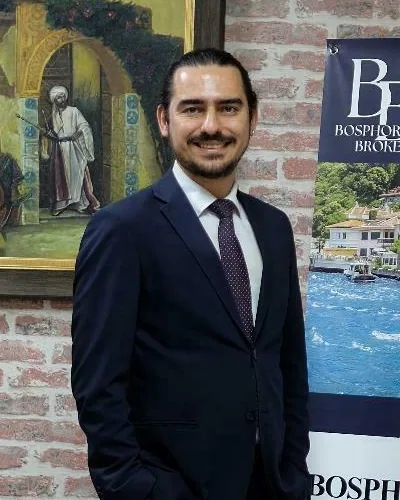
Written by
Burak Ünal
Turkish Real Estate Broker - License no. 3408704
Burak Ünal is a licensed real estate broker in Turkey (license no. 3408704) who advises Turkish and international clients on buying, selling and renting property, including property purchases for Turkish citizenship by investment, through his registered sole proprietorship trading as Bosphorus Brokers. He holds an MSc in Finance from the London School of Economics (2019) and a BSc in Business Management from Boğaziçi University (2016), and passed Turkey's official real estate broker licensing exam in 2021. A Chevening scholar and a Congress Member of Galatasaray Sports Club, he advises clients in English (IELTS 8.0), Turkish and French.