
To check a title deed in Turkey before you buy, you read the current land registry record (the TAPU record) for the exact unit, confirm that the seller is the registered owner, and look for mortgages, seizures and annotations that would pass to you with the property. You then match that record against the municipality's zoning and occupancy files, because a clean deed on a building without an occupancy permit can still cause trouble. This guide sets out each check in the order we follow at Bosphorus Brokers in Istanbul.
Every check below belongs before you sign a sales agreement or pay a deposit. Once a transfer is registered, undoing it is slow and expensive. If you are wondering how to verify a TAPU in Turkey from abroad, most of these steps can be started remotely and finished through a power of attorney. If you are earlier in the process, our guide to buying property in Turkey as a foreigner covers the full sequence from search to keys.
What Is a TAPU and Why Check It Before Buying?
A TAPU is the title deed issued by the General Directorate of Land Registry and Cadastre (Tapu ve Kadastro Genel Müdürlüğü, TKGM), and it is the only document that proves who owns a property in Turkey. The paper deed in the seller's drawer is a snapshot. The live record in the TKGM system is what counts, and it can change after the paper was printed: a bank can register a mortgage, an enforcement office can register a seizure, or a court can place an injunction on the unit.
A TAPU check before buying property protects you from three common problems. You may be dealing with someone who is not the sole owner. You may inherit a debt secured on the property. Or the registered use may not match what you saw on the viewing. None of these show up in a listing.
How to Verify a TAPU in Turkey: Getting the Current Record
Turkish title deed verification starts with a current record pulled from the TKGM system, never a photo of an old deed. In practice there are three ways to get one.
- The seller's e-Devlet download. The registered owner can log in to e-Devlet, the government's online portal, and download the title deed information for the property. The document usually carries a barcode that can be checked on e-Devlet's document verification page, so you know it has not been edited.
- A registry extract. The owner, or someone holding the owner's power of attorney, can request a registry extract (tapu kayıt örneği) from the land registry office.
- Web Tapu. TKGM's online service lets owners see their registered properties and start applications, including the sale application itself.
Ask for the record as close to signing as possible, and check it again on the transfer day. In our experience working with foreign buyers, a record that was clean two months ago says little about today, especially when the seller has other debts. A seller who will not share a current record before a deposit is a warning sign in itself.
What the Public Parcel Search Shows
TKGM's public parcel search (Parsel Sorgu) needs no owner login. Enter the province, district, neighbourhood, block (ada) and parcel (parsel) numbers and you see the plot on a map with its area and type. It does not show the owner or any mortgage, but it confirms that the block and parcel on the deed belong to the building you viewed.
What to Read on the Title Deed Record
A Turkish title deed record has a fixed set of fields, and each one answers a specific question about the property.
- Location, block and parcel: these must match the building you viewed and the parcel search.
- Qualification (nitelik): the registered use, such as residence (mesken), shop (dükkan) or land (arsa). A flat registered as a shop or office is not a home on paper.
- Independent unit number and floor: check them against the door number on site.
- Owner and share: every registered owner, their ID number and their share of the unit.
- Ownership type: condominium ownership or construction servitude (below).
- Encumbrances: mortgages, seizures, annotations and declarations (next section).
Condominium Ownership or Construction Servitude?
Condominium ownership (kat mülkiyeti) means the building is finished, its occupancy permit has been issued and each flat is a separate registered unit. Construction servitude (kat irtifakı) means the unit was registered on the project before completion. On a new build this is normal. On a resale flat in an older building, it often means the occupancy permit was never obtained.
Shared and Inherited Titles
If the record shows more than one owner, every co-owner must sign the sale or be represented by a notarised power of attorney. Inherited property is a frequent case: until the heirs obtain the certificate of inheritance (mirasçılık belgesi, often still called veraset ilamı) and register it, the unit may still stand in the name of the deceased, and no sale can be registered. A shared title on land (hisseli tapu) is a separate risk, because you buy a percentage of a plot rather than a defined unit.
Mortgages, Seizures and Annotations on the Title Deed
The encumbrances section is where most problems hide, and it is the part of Turkish title deed verification that needs the most care.
Mortgage (İpotek)
A mortgage registered in favour of a bank means the property secures a loan. It is common and not a reason to walk away, but it must be lifted at or before the transfer. Usually the bank confirms the outstanding balance in writing, part of your payment clears the loan, and the bank releases the mortgage at the land registry office on the day. Never pay the full price to the seller while a mortgage is still registered.
Seizure (Haciz)
A seizure is registered by an enforcement office when the owner owes money to a creditor or to the state, for example unpaid taxes or social security contributions. A seizure stays on the unit after a sale, so it should be lifted before the transfer. Ask the seller to clear it and show you a record without it before you pay anything.
Annotations and Declarations (Şerh and Beyan)
The annotation section lists rights that other people hold against the property. Typical entries include:
- A lease annotation (kira şerhi), which keeps an existing tenant's lease binding on a new owner.
- A sales promise registered for another buyer (satış vaadi şerhi).
- An injunction (ihtiyati tedbir) placed while a dispute over the property is pending.
- A usufruct (intifa hakkı), which lets another person live in or use the property for life or a set period.
- A citizenship annotation, recording that the unit was bought for Turkish citizenship and may not be sold for three years.
- Declarations (beyan), such as the building's management plan.
Any entry you do not understand should be explained in writing before you sign. A lease annotation or a usufruct can mean you cannot move in, and an injunction can freeze the sale. Reading the court or enforcement file behind an entry is work for an independent lawyer you engage; we coordinate the paperwork around it.
An existing tenancy matters even without an annotation. Under Article 310 of the Turkish Code of Obligations, a lease generally passes to the new owner when the property is sold, so ask whether the unit is let and read the contract before you sign.
Checks Beyond the Deed: Zoning, Occupancy and Debts
A clean title deed record is necessary but not enough, because some costly problems sit in municipal and utility files rather than at the land registry.
- Occupancy permit (iskan belgesi): issued by the municipality when a building is completed in line with its approved plans. Ask for a copy and compare the floor area and number of units with what you see.
- Zoning status (imar durumu): shows what the plot may be used for and whether it is earmarked for roads, green space or urban renewal. Enclosed balconies, added floors or merged units that are not on the approved plan do not appear on the deed, and a new owner takes them over.
- Property tax, utilities and building dues: ask for statements of unpaid property tax (emlak vergisi), electricity, water, gas and management dues (aidat). They are easiest to settle before the keys change hands.
- Earthquake insurance (DASK): compulsory for a residential unit before the transfer. Checking that the policy address matches the deed is a quick way to catch a wrong unit number.
Title Deed Due Diligence for Foreign Buyers
Title deed due diligence for foreign buyers adds a few checks a Turkish buyer does not need, because Law No. 2644 on Land Registry limits where and how much foreigners can buy.
- Military and security zones: foreigners cannot buy in military forbidden zones and certain security zones, and the land registry checks each foreign purchase with the military authorities, which can add time.
- The district limit: under Article 35 of Law No. 2644, foreign nationals together may own up to 10% of the private land area of a district. Where the limit is reached, no new foreign purchase is registered.
- Your nationality: citizens of a small number of countries cannot buy property in Turkey under current rules, so check your position before viewings.
- Residence and citizenship conditions: a property used for a residence permit needs at least USD 200,000 of title-deed value for homes acquired on or after 16 October 2023, in a district open to new residence permits. The real estate route to Turkish citizenship needs at least USD 400,000 and a three-year no-sale annotation on the deed. Both figures apply as of the time this article is written; the authorities decide, so check current rules.
- The official valuation report: a foreign buyer needs a report from an SPK-licensed valuation firm before the transfer, and the valuer inspects the unit against the deed and the plans.
Burak Ünal checks the residence-permit and citizenship conditions of a property before a client commits (the authorities decide) and coordinates the valuation application. The valuation report itself is prepared by the SPK-licensed firm, not by us.
How to Check a Title Deed in Turkey Step by Step
The sensible order is to check a title deed in Turkey before any money changes hands, then repeat the key checks on the transfer day.
- Get the block, parcel and unit number, and confirm the plot on Parsel Sorgu.
- Ask the seller for a current, barcoded record from e-Devlet and verify the barcode.
- Compare the owner's name and ID number with the seller's passport or ID card, and list every co-owner.
- Match the qualification, ownership type and share to the unit you viewed.
- Read every mortgage, seizure, annotation and declaration, and agree in writing how each will be cleared.
- Check the occupancy permit and zoning status with the municipality.
- Collect statements for property tax, utilities and building dues, and check the DASK policy address.
- As a foreign buyer, confirm the zone, district limit and any residence or citizenship conditions.
- Tie payment to a clean record in the sales agreement, and pull the record again on the morning of the transfer.
A full TAPU check before buying property usually takes from a few days to a couple of weeks, depending on how fast the seller and the municipality produce documents. That is an indication only, and no one can promise a fixed duration. The costs of the transfer itself, including the 4% title-deed fee on the declared price (by law 2% from the buyer and 2% from the seller) as of the time this article is written, are set out in our guide to the full cost of buying property in Turkey.
Common Problems Found When You Check a Title Deed in Turkey
Most problems found in a title deed check can be solved before the sale, as long as they are found before you pay.
| What the record shows | What it means | Usual way forward |
|---|---|---|
| Mortgage | The unit secures a bank loan | Bank confirms the balance; loan cleared from the price at the transfer |
| Seizure | The owner owes a creditor or the state | Seller pays and the seizure is lifted before any deposit |
| Construction servitude on an old building | Occupancy permit may be missing | Check municipal records before going further |
| Several owners or heirs | More than one signature needed | All sign, or give notarised powers of attorney; inheritance registered first |
| Qualification as shop or office | Registered use differs from actual use | Clarify with the municipality; permits may depend on it |
| Lease annotation or usufruct | Someone else may stay in the property | Written release, or a change in price and plans |
How a Licensed Broker Helps With the Title Deed Check
A licensed broker coordinates the title deed checks and the documents behind them, while the decision to buy stays with you. At Bosphorus Brokers, we typically:
- request the current record from the seller and read it with you line by line;
- chase the municipal, tax and utility statements;
- coordinate the valuation application, the sworn translator and any power of attorney at a notary;
- book the transfer appointment at the land registry office.
Our commission is 2% + VAT from the buyer and 2% + VAT from the seller (the legal maximum: 4% + VAT in total), payable at the title-deed transfer under the written brokerage agreement. What is included is described on our property purchase service in Turkey page.
To check a title deed in Turkey properly, work from a current barcoded record, read every owner and encumbrance, match the deed to the municipal files, and pull the record once more on the transfer day. Done in that order, the check costs little and catches the problems that matter.
Looking to Buy, Sell or Rent Property in Turkey?
Bosphorus Brokers is a licensed real estate brokerage in Istanbul that helps foreigners buy, sell, rent and manage property across Turkey. To discuss your plans, reach us by phone or WhatsApp at +90 533 140 04 96, or visit us at Merkez Mahallesi Hasat Sokak No:12/2, 34384 Şişli, İstanbul. Contact us for more information.
Frequently Asked Questions
Can I check a title deed in Turkey online?
Partly. The registered owner can download a barcoded title deed record from e-Devlet and share it with you, and anyone can see the plot's location, area and type on TKGM's public parcel search, which does not show the owner or any mortgage.
Can a foreigner see who owns a property in Turkey?
Not directly, because the owner record is not public. Ask the seller for a current e-Devlet record, or for a registry extract obtained by the owner or by someone holding their power of attorney.
Is it safe to buy a property with a mortgage on the title deed?
It can be, if the mortgage is cleared at or before the transfer. The bank confirms the balance in writing, part of the price pays off the loan, and the mortgage is released at the land registry office on the same day.
What is the difference between kat mülkiyeti and kat irtifakı?
Kat mülkiyeti is condominium ownership of a finished building with an occupancy permit. Kat irtifakı is construction servitude registered before completion, which on an older resale building often means the occupancy permit is missing.
How long does a title deed check take in Turkey?
Usually from a few days to a couple of weeks, depending on how quickly the seller and the municipality produce documents. It is an indication only, not a fixed duration.
Do I need a lawyer to check a TAPU?
The law does not require one, but many foreign buyers engage an independent lawyer, especially for inherited titles, injunctions or seizures. We coordinate the documents and the transfer; we do not act as anyone's lawyer.
About Bosphorus Brokers
Bosphorus Brokers is a licensed real estate brokerage in Istanbul, operated by Burak Ünal through his registered sole proprietorship (Ministry of Trade authorisation no. 3408704). Under a written brokerage agreement, we help foreign buyers, sellers, landlords and tenants with property search, viewings, market and price research, negotiation, buyer and seller representation, title deed coordination, leasing and property management across Istanbul, Antalya, Bodrum, Fethiye, Izmir and Ankara, including purchases made for the real estate route to Turkish citizenship. Burak Ünal advises clients personally in English, Turkish and French; clients who speak Russian, Chinese or Arabic are served through a translator. We are not authorised by the Capital Markets Board (SPK) to give investment advice, we do not prepare valuation reports (SPK-licensed valuation firms do), and we do not guarantee rental income, price growth or any citizenship or residence outcome.
Disclaimer: This article is for general informational purposes only and you are strongly advised to consult a professional to evaluate your personal situation. No liability is accepted that may arise from the use of the information in this article.
Citizenship by investment
Every route to a Turkish passport, compared: property, bank deposit, government bonds and the private pension system.
Frequently asked questions
- Can I check a title deed in Turkey online?
- Partly. The registered owner can download a barcoded title deed record from e-Devlet and share it with you, and anyone can see the plot's location, area and type on TKGM's public parcel search, which does not show the owner or any mortgage.
- Can a foreigner see who owns a property in Turkey?
- Not directly, because the owner record is not public. Ask the seller for a current e-Devlet record, or for a registry extract obtained by the owner or by someone holding their power of attorney.
- Is it safe to buy a property with a mortgage on the title deed?
- It can be, if the mortgage is cleared at or before the transfer. The bank confirms the balance in writing, part of the price pays off the loan, and the mortgage is released at the land registry office on the same day.
- Do I need a lawyer to check a TAPU?
- The law does not require one, but many foreign buyers engage an independent lawyer, especially for inherited titles, injunctions or seizures. We coordinate the documents and the transfer; we do not act as anyone's lawyer.
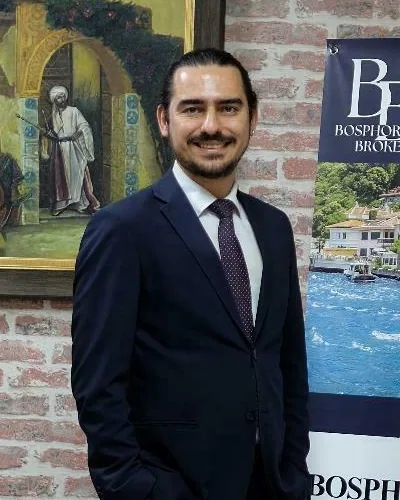
Written by
Burak Ünal
Turkish Real Estate Broker - License no. 3408704
Burak Ünal is a licensed real estate broker in Turkey (Ministry of Trade authorisation no. 3408704), licensed since 4 October 2022, the day he opened Bosphorus Brokers, his registered sole proprietorship. He handles purchases, sales and lettings of every kind for Turkish and international clients, across Istanbul and in other Turkish cities, and specialises in foreign buyers: the tax number and bank account, the currency exchange certificate (DAB), the land registry's identity declaration form, the official valuation report, the property conditions for a residence permit or citizenship, translators and powers of attorney, through to the title deed. He holds an MSc in Finance from the London School of Economics (2019) and a BSc in Business Management from Boğaziçi University (2016), and passed Turkey's official real estate broker licensing exam in 2021. A Chevening scholar and a Congress Member of Galatasaray Sports Club, he advises clients in English (IELTS 8.0), Turkish and French.