
The core documents to sell property in Turkey are the title deed (tapu), your valid passport, a Turkish tax number, a current DASK earthquake insurance policy and the municipal property value letter. If you will not attend the land registry yourself, add a notarised power of attorney. When the buyer is a foreigner, the file also needs an official valuation report from an SPK-licensed valuation firm. This checklist explains each document, who issues it, what it costs as of the time this article is written, and the extra paperwork for mortgaged, inherited or citizenship-linked homes.
Most delays we see at Istanbul land registry offices come from one missing or badly worded paper, not from the buyer or the price. If you know what is required before you list, the transfer itself usually takes a single appointment. For the wider process, from pricing to marketing and negotiation, see our guide to selling property in Turkey; this article stays on the paperwork.
Documents to Sell Property in Turkey: The Core Checklist
Every seller needs the same core set of papers at the Land Registry (Tapu ve Kadastro Genel Müdürlüğü), whatever the buyer's nationality. The application is opened online through the Web Tapu system or at the land registry office, and these documents to sell property in Turkey are checked at the appointment.
Title deed (tapu senedi)
The title deed proves your ownership and identifies the property by province, district, block and parcel. Bring the original if you have it. If it is lost, the land registry can in most cases still complete the sale from its own records once your identity is confirmed, so a missing deed slows the file down but rarely stops it.
Passport and photographs
A foreign seller attends with the original, valid passport. If your passport number has changed since you bought, bring the old passport too, or a consular letter linking the two numbers. Some offices still ask for one or two recent passport-style photographs, while many now photograph the parties at the appointment.
Turkish tax number
Both parties need a Turkish tax number (vergi numarası). If you bought the property yourself, you already have one: it appears on your purchase documents and can be retrieved from the Turkish Revenue Administration with your passport. Heirs who never bought in Turkey obtain one at any tax office (vergi dairesi) with their passport, usually the same day.
DASK earthquake insurance policy
A valid compulsory earthquake insurance policy (DASK) must exist for a residential property before the transfer is registered. If your policy has lapsed, an insurance agency can usually issue a new one the same day.
Municipal property value letter
The municipality issues a letter stating the property's tax value (emlak vergisi değeri). The title deed fee is calculated on the declared price, which may not be lower than that figure. Many municipalities issue the letter only after unpaid property tax has been settled. In many Istanbul districts the land registry can now retrieve the value electronically, so ask the registry before you visit the municipality.
Documents Required to Sell a House in Turkey When the Buyer Is a Foreigner
When the buyer is a foreigner, the documents required to sell a house in Turkey grow by two items: an official valuation report and, for any party who does not speak Turkish, a sworn translator at the signing.
- Valuation report. The land registry requires a report from a valuation firm licensed by the Capital Markets Board (SPK) for sales to foreign buyers. The buyer's side normally orders and pays for it. As of the time this article is written, it costs about TRY 60,000 (about USD 1,200) in recent transactions, against a 2026 minimum tariff of TRY 17,622 + VAT. As the seller, you give the valuer access to the property and a copy of the deed.
- Sworn translator. A foreign seller who does not speak Turkish signs through a sworn translator, typically TRY 5,000 to 10,000 per appointment as of the time this article is written.
- Buyer's currency certificate. A foreign buyer usually presents a currency exchange certificate (Döviz Alım Belgesi). It is the buyer's document, but your transfer waits for it, so ask about it early.
None of this changes the core list. It simply means the documents required to sell a house in Turkey to a foreign buyer take a few more days to assemble.
Selling From Abroad: The Power of Attorney
A seller who cannot attend the land registry signs a power of attorney (vekaletname) that authorises a named person to sell the property and receive the price. You can sign it at a notary in Turkey, at a Turkish consulate abroad, or at a local notary in your country. A power of attorney from a foreign notary needs an apostille and a sworn Turkish translation before a Turkish notary can process it.
The wording matters more than the stamp. The document should:
- name the property by its title deed details (province, district, block and parcel);
- authorise the sale and the signing at the land registry;
- if you want it, authorise collecting the price and releasing any mortgage.
As of the time this article is written, a notary in Turkey usually charges TRY 10,000 to 15,000 for a property power of attorney, depending on the text.
In our experience working with foreign sellers, the most common cause of a postponed title deed appointment is a power of attorney signed abroad that authorises the sale but not receiving the price, or that describes the property too loosely. We check the draft wording with the notary or consulate in advance, so it matches what the land registry expects.
Extra Paperwork for Special Cases
The paperwork for selling property in Turkey grows when the property carries a mortgage, was inherited, is a family home, or was bought for citizenship or with a VAT exemption.
Mortgaged property
A mortgage (ipotek) registered on the deed must be released before or at the transfer. The lender issues a release letter once the loan is repaid, and it is common to repay from the buyer's funds on the day, with the bank's representative present at the land registry. Any attachment (haciz) on the deed must also be cleared.
Inherited property
Heirs first need a certificate of inheritance (veraset ilamı). Where foreign heirs are involved, it is usually issued by a Turkish civil judgeship (sulh hukuk mahkemesi), and your own independent lawyer can apply for it. The heirs then register the inheritance in their own names at the land registry and file the inheritance tax return, and only then can they sell, together or through powers of attorney.
Family residence
If the deed carries a family residence annotation (aile konutu şerhi), the seller's spouse must give written consent, either in person at the appointment or through a notarised consent.
Property bought for Turkish citizenship
A property bought for citizenship carries a three-year no-sale annotation under the Citizenship Regulation, and the land registry does not register a sale while it is in force. Once the three years have passed and the annotation is lifted, the sale follows the normal checklist.
New build bought with the VAT exemption
If you bought a new home from the developer as a non-resident foreigner under VAT Law Art. 13(i), the exemption is lost if the property is sold within three years (Law No. 7394, since 1 May 2022), and the VAT that was not charged becomes payable. Check the purchase date on the deed before you agree a timetable.
Documents to Sell Property in Turkey at a Glance
The table below summarises who issues each document and when a seller needs it, as of the time this article is written.
| Document | Issued by | Needed when |
|---|---|---|
| Title deed | Land Registry | Every sale (registry records suffice if lost) |
| Passport or Turkish ID card | Your country or Turkey | Every sale |
| Tax number | Turkish Revenue Administration | Every sale |
| DASK policy | Insurance agency | Residential property |
| Municipal value letter | Municipality | Every sale |
| Valuation report | SPK-licensed valuation firm | Foreign buyer |
| Sworn translator | Sworn translator at the registry | A party does not speak Turkish |
| Power of attorney | Notary or Turkish consulate | Seller not present |
| Mortgage release letter | Lender | Mortgage on the deed |
| Certificate of inheritance | Notary or civil judgeship | Inherited property |
Paperwork Buyers Ask for Before They Commit
Beyond the paperwork for selling property in Turkey that the registry requires, buyers and their banks often ask for documents that shorten negotiation.
- Occupancy permit (iskan). Banks generally lend only against a property with an iskan, and buyers ask for it as evidence that the building matches its approved plans.
- Building management letter. A note from the management (yönetim) confirming there are no unpaid service charges (aidat).
- Recent utility bills for electricity, water and gas, so the accounts can move to the buyer after the sale.
- Property tax receipts showing the annual emlak vergisi is paid up to date.
When we list a property for sale, we collect these before the first viewing, so a serious buyer is not left waiting for a paper. You can start that process on our sell your property page.
Fees, Taxes and the Title Deed Transfer for Foreign Sellers
The title deed transfer for foreign sellers carries the same official costs as for Turkish sellers, and most are settled on the day of the appointment. The figures below apply as of the time this article is written.
- Title deed fee: 4% of the declared price, by law 2% paid by the buyer and 2% by the seller.
- Revolving fund fee (döner sermaye): about TRY 6,681 per sale in Istanbul in 2026.
- Brokerage commission: 2% + VAT from the buyer and 2% + VAT from the seller (the legal maximum: 4% + VAT in total), payable at the title-deed transfer, under the written brokerage agreement.
A gain on the sale may be subject to income tax (değer artış kazancı), depending on when you acquired the property and how long you held it. These rules are amended from time to time, so check your position with a certified accountant (mali müşavir) before you sign. Our guide to property taxes in Turkey sets out the main rules. Moving the proceeds abroad usually runs through a Turkish bank, which asks for the title deed and sale documents as proof of the source of funds. Keep copies of everything from the title deed transfer for foreign sellers.
What Do I Need to Sell My House in Turkey? The Order of Steps
The practical answer to "what do I need to sell my house in Turkey" is the core checklist above, gathered in this order.
- Confirm the deed: owner names, shares and any annotation, mortgage or attachment, through e-Devlet or the land registry.
- Settle any property tax arrears and obtain the municipal value letter.
- Renew the DASK policy if it has lapsed.
- If you will be abroad, sign the power of attorney and send it to Turkey.
- Agree the price and terms with the buyer, then apply for the appointment through Web Tapu.
- Attend, or let your representative attend, with the sworn translator; pay the fees and sign, as the buyer's payment and the deed change hands.
- Close or transfer the utility accounts, and keep the sale documents for your tax filing.
For our clients, Burak Ünal handles or coordinates the sworn translator, the power of attorney at a notary and the title-deed application through to registration.
The documents to sell property in Turkey are few, but each one has to be current and correctly worded on the day. Check the deed first, prepare the core papers early, and if you are selling from abroad, get the power of attorney right before you agree a date. Rules and fees change, so confirm current requirements with the land registry or an independent professional before you sign.
Looking to Sell Property in Turkey?
Bosphorus Brokers is a licensed real estate brokerage in Istanbul that helps foreigners buy, sell, rent and manage property across Turkey. To discuss your plans, reach us by phone or WhatsApp at +90 533 140 04 96, or visit us at Merkez Mahallesi Hasat Sokak No:12/2, 34384 Şişli, İstanbul. Contact us for more information.
Frequently Asked Questions
What are the documents to sell property in Turkey as a foreigner?
A foreign owner needs the title deed, a valid passport, a Turkish tax number, a current DASK policy and the municipal property value letter. A sworn translator is required if you do not speak Turkish, and a power of attorney if you will not attend.
Can I sell my property in Turkey without being there?
Yes, through a power of attorney signed at a Turkish notary, at a Turkish consulate, or at a foreign notary with an apostille and a sworn translation. It should name the property and authorise both the sale and receiving the price.
What if I have lost my title deed?
A lost title deed does not usually prevent a sale, because the land registry works from its own records. Your identity is checked at the appointment, and a new deed is issued to the buyer.
Who pays for the valuation report when the buyer is a foreigner?
The buyer's side usually orders and pays for it, about TRY 60,000 in recent transactions as of the time this article is written. Bosphorus Brokers does not prepare valuation reports; an SPK-licensed valuation firm does.
Can I sell a property I bought for Turkish citizenship?
Not until the three-year no-sale annotation required by the Citizenship Regulation has expired and been lifted. After that, the normal seller documents apply.
What do I need to sell my house in Turkey if it has a mortgage?
You need the lender's release letter. The mortgage is usually released at the land registry on the day of the sale, often repaid from the buyer's funds with the bank's representative present.
About Bosphorus Brokers
Bosphorus Brokers is a licensed real estate brokerage in Istanbul, operated by Burak Ünal through his registered sole proprietorship (Ministry of Trade authorisation no. 3408704). Under a written brokerage agreement, we help foreign buyers, sellers, landlords and tenants with property search, viewings, market and price research, negotiation, buyer and seller representation, title deed coordination, leasing and property management across Istanbul, Antalya, Bodrum, Fethiye, Izmir and Ankara, including purchases made for the real estate route to Turkish citizenship. Burak Ünal advises clients personally in English, Turkish and French; clients who speak Russian, Chinese or Arabic are served through a translator. We are not authorised by the Capital Markets Board (SPK) to give investment advice, we do not prepare valuation reports (SPK-licensed valuation firms do), and we do not guarantee rental income, price growth or any citizenship or residence outcome.
Disclaimer: This article is for general informational purposes only and you are strongly advised to consult a professional to evaluate your personal situation. No liability is accepted that may arise from the use of the information in this article.
Citizenship by investment
Every route to a Turkish passport, compared: property, bank deposit, government bonds and the private pension system.
Frequently asked questions
- What are the documents to sell property in Turkey as a foreigner?
- A foreign owner needs the title deed, a valid passport, a Turkish tax number, a current DASK policy and the municipal property value letter. A sworn translator is required if you do not speak Turkish, and a power of attorney if you will not attend.
- Can I sell my property in Turkey without being there?
- Yes, through a power of attorney signed at a Turkish notary, at a Turkish consulate, or at a foreign notary with an apostille and a sworn translation. It should name the property and authorise both the sale and receiving the price.
- What if I have lost my title deed?
- A lost title deed does not usually prevent a sale, because the land registry works from its own records. Your identity is checked at the appointment, and a new deed is issued to the buyer.
- Can I sell a property I bought for Turkish citizenship?
- Not until the three-year no-sale annotation required by the Citizenship Regulation has expired and been lifted. After that, the normal seller documents apply.
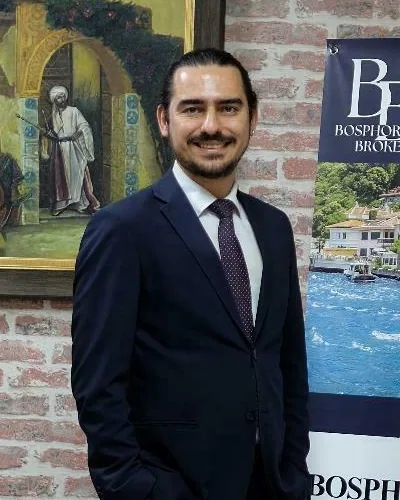
Written by
Burak Ünal
Turkish Real Estate Broker - License no. 3408704
Burak Ünal is a licensed real estate broker in Turkey (Ministry of Trade authorisation no. 3408704), licensed since 4 October 2022, the day he opened Bosphorus Brokers, his registered sole proprietorship. He handles purchases, sales and lettings of every kind for Turkish and international clients, across Istanbul and in other Turkish cities, and specialises in foreign buyers: the tax number and bank account, the currency exchange certificate (DAB), the land registry's identity declaration form, the official valuation report, the property conditions for a residence permit or citizenship, translators and powers of attorney, through to the title deed. He holds an MSc in Finance from the London School of Economics (2019) and a BSc in Business Management from Boğaziçi University (2016), and passed Turkey's official real estate broker licensing exam in 2021. A Chevening scholar and a Congress Member of Galatasaray Sports Club, he advises clients in English (IELTS 8.0), Turkish and French.