
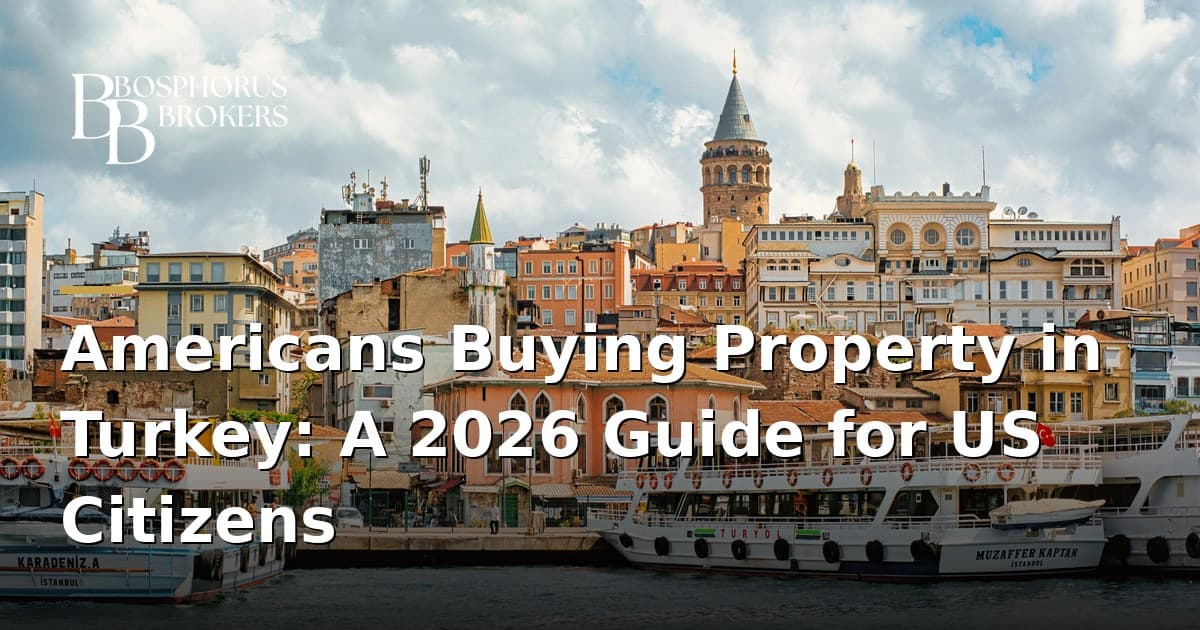

Americans buying property in Turkey can hold the title deed (tapu) in their own name, without a Turkish partner or a local entity. The purchase needs a Turkish tax number, a Turkish bank account, an independent valuation report and an appointment at the Land Registry. A straightforward purchase can often complete within a few weeks once the documents are ready, although no timeline is guaranteed.
What catches many US citizens out is not the Turkish side but the US side. A Turkish home and a Turkish bank account bring filing duties back home, and this guide covers both.
Can US Citizens Own Property in Turkey?
Yes, US citizens can own property in Turkey on full title deed terms, subject to a few statutory limits that apply to all foreign buyers. Article 35 of the Land Registry Law (No. 2644), as amended in 2012, lets citizens of countries designated by presidential decision acquire real estate in Turkey, and the United States is among them. The strict reciprocity requirement of the old law no longer applies. The limits are:
- A foreign individual can own up to 30 hectares of land in total across Turkey.
- Foreign ownership within a single district is capped at 10% of its private land area.
- Property inside military and strategic security zones cannot be transferred to foreigners. The Land Registry checks this before the transfer goes ahead.
For a buyer of a single apartment or villa in Istanbul, Antalya, Bodrum, Fethiye or Izmir, these limits rarely become an issue in practice. Turkish real estate for Americans works the same way as for any other eligible nationality. You own the property outright, and you can rent it out, leave it to heirs or sell it later, subject to Turkish tax rules.
Buying Property in Turkey as a US Citizen: Step by Step
Buying property in Turkey as a US citizen follows the same sequence as for any foreign buyer, in seven main steps.
- Search and viewings. You shortlist properties, view them in person or by video call, and compare asking prices with recent sales in the same district. The decision on what and whether to buy is always yours.
- Offer and sales agreement. Once a price is agreed, the parties usually sign a reservation or preliminary sales agreement. Have the agreement reviewed by your own independent lawyer before you sign or pay a deposit.
- Tax number. You obtain a Turkish tax number (vergi numarası) from a tax office with your passport. It is free and usually issued the same day.
- Turkish bank account. You open an account to receive and pay funds. Turkish banks commonly ask US account holders for a Form W-9 under FATCA reporting, along with proof of address.
- Valuation report. The Land Registry requires a valuation report for purchases by foreigners. An SPK-licensed valuation firm prepares it; we coordinate the appointment but do not prepare valuation reports ourselves.
- Earthquake insurance. Compulsory earthquake insurance (DASK) must be in place for the property before the transfer.
- Title deed transfer. Buyer and seller sign at the Land Registry Directorate (Tapu Müdürlüğü), with a sworn translator present if you do not speak Turkish. The title deed fee is paid beforehand, and the new title deed is normally issued at the appointment.
After the transfer, you register the property with the local municipality for the annual property tax and move the utility subscriptions into your name.
Buying Remotely With a Power of Attorney
You do not have to fly to Turkey to complete a purchase. Many American buyers sign a power of attorney at a Turkish consulate in the United States, or before a US notary with an apostille, since both countries are parties to the Hague Apostille Convention. A US notarised document then needs a certified Turkish translation. Keep the scope of the power of attorney specific to the purchase, and have your own independent lawyer review the wording.
Costs of Buying Property in Turkey as an American
The main costs for Americans buying property in Turkey, on top of the price, are the title deed fee, the valuation report, insurance, translation and brokerage commission. As of the time this article is written, they are:
- Title deed fee: 4% of the declared sale value. By law it is split equally between buyer and seller, although the parties often agree a different split in practice.
- Revolving fund fee (döner sermaye): a smaller fixed fee set each year by the Land Registry.
- Valuation report: a fee charged by the SPK-licensed valuation firm.
- Sworn translator and notary fees: for the title deed appointment and any power of attorney.
- DASK earthquake insurance: an annual premium based on the size and construction of the building.
- Brokerage commission: up to 2% + VAT of the price from the buyer and up to 2% + VAT from the seller (4% + VAT in total, the legal cap), under the written brokerage agreement.
VAT may also apply when you buy a new build directly from a developer. Under VAT Law Article 13(i), non-resident foreign buyers can be exempt on the first sale from the developer when the price is paid in foreign currency brought in from abroad. The exemption is lost if the property is sold within three years (Law No. 7394, since 1 May 2022).
Once you own the property, annual property tax (emlak vergisi) is charged on the municipal assessed value. For residential property the base rate is 0.1%, doubled inside metropolitan municipalities such as Istanbul and Antalya. Fees and rates change often, so confirm the current figures with the Land Registry, the Turkish Revenue Administration or an independent professional.
US Tax Rules for Property in Turkey
US tax rules for property in Turkey apply because the United States taxes its citizens on worldwide income, wherever they live. Owning a home abroad is not taxable in itself, but the accounts and income connected to it usually are reportable.
Reporting Turkish Bank Accounts: FBAR and FATCA
- FBAR (FinCEN Form 114): required, as of the time this article is written, when the combined balance of your foreign financial accounts exceeds USD 10,000 at any point during the year. A Turkish account used to pay for a property can easily cross that line.
- Form 8938 (FATCA): filed with your tax return when your specified foreign financial assets exceed the IRS thresholds for your filing status. Real estate held directly in your own name is generally not a specified foreign financial asset, but the bank account is.
Rental Income and Gains on Sale
If you rent the property out, the rent is generally taxable in Turkey and must also be reported on your US return. The income tax treaty between the United States and Turkey and the US foreign tax credit are designed to reduce double taxation, but they do not remove the filing duty. When you sell, the gain is measured in US dollars for US purposes, so currency movements between purchase and sale can change the figure you report.
We are a brokerage and do not give tax advice, so confirm your position with a US tax professional who handles international filings and with a Turkish accountant (mali müşavir) for the Turkish side.
Turkish and US Obligations at a Glance
The table below summarises the main Turkish and US obligations for a property owner, as of the time this article is written. US tax rules for property in Turkey sit alongside the Turkish duties, not instead of them.
| Obligation | Where | When |
|---|---|---|
| Turkish tax number | Turkish tax office | Before the purchase |
| Valuation report | SPK-licensed valuation firm | Before the title deed transfer |
| Title deed fee | Land Registry | At the transfer |
| DASK earthquake insurance | Turkish insurer | At the transfer, renewed yearly |
| Property tax | Municipality | Yearly, in two instalments |
| Rental income declaration | Turkish Revenue Administration | Yearly, if the property is rented |
| FBAR | FinCEN | Yearly, if accounts exceed USD 10,000 |
| US income tax return | IRS | Yearly |
Residence Permits and Turkish Citizenship for Americans
Owning property in Turkey can support a residence permit or a Turkish citizenship application, but each route has its own official conditions and neither follows automatically from the purchase.
Residence Permit Through Property
As of the time this article is written, a short-term residence permit based on property ownership requires at least USD 200,000 of title-deed value for homes acquired on or after 16 October 2023, in Istanbul and, since that date, everywhere else in Turkey. The district must also be open to new residence permits. Applications go to the Directorate General of Migration Management, and the rules change, so check the current conditions before you buy.
Entry rules for short visits also change from time to time, so confirm them with the Turkish Ministry of Foreign Affairs before you travel.
Turkish Citizenship by Investment
Under Article 20 of the Citizenship Regulation, as of the time this article is written, the real estate route requires property worth at least USD 400,000, with an annotation on the title deed that it will not be sold for 3 years. The other routes are a deposit, government debt instruments, fund units, a BES private pension plan or fixed capital investment of USD 500,000, or creating employment for 50 people.
Processing typically takes 8 to 12 months end to end for a complete file and is not guaranteed. We explain the official conditions and coordinate the procedural steps for a qualifying purchase; the choice of route is yours, and we do not recommend one over another.
Turkey permits dual citizenship, and the United States generally does not require you to give up US citizenship when you acquire another, but confirm your position with the US Department of State and with independent professionals who understand US nationality rules. US tax filing obligations continue whatever second citizenship you hold.
Practical Tips for Americans Buying Property in Turkey
The smoothest purchases by Americans buying property in Turkey share a few habits: verified paperwork, documented money transfers and a clear timetable for each party.
- Check the title deed record. Before any deposit, ask for the title deed record (tapu kaydı) and check it for mortgages, liens and annotations.
- Confirm the occupancy permit. For a completed building, confirm that it has an occupancy permit (iskan).
- Document every transfer. Wire funds from your US bank, keep the SWIFT records, and keep the foreign exchange purchase certificate (DAB) issued when currency is converted, which the citizenship route and the VAT exemption rely on.
- Declare the real price. Under-declaring the sale price to reduce the title deed fee exposes both parties to tax penalties and can create problems on resale.
In our experience working with American buyers, the step that most often slows a purchase is opening the Turkish bank account, because banks ask US account holders for additional FATCA paperwork. Bringing a completed Form W-9 and a recent proof of address helps.
From our office in Şişli, Istanbul, Bosphorus Brokers coordinates the tax number, bank, valuation and title deed appointments under the written brokerage agreement.
Americans Buying Property in Turkey: Summary
Americans buying property in Turkey can own a title deed in their own name, follow a clear seven-step process and budget for a title deed fee, a valuation report, insurance and commission. Turkish real estate for Americans also comes with US reporting duties, such as FBAR and possibly Form 8938, so when buying property in Turkey as a US citizen, plan the Turkish and US paperwork together and confirm current rules with the relevant authorities and independent professionals.
Looking to Buy Property in Turkey as an American?
Bosphorus Brokers is a licensed real estate brokerage in Istanbul that helps foreigners buy, sell, rent and manage property across Turkey. To discuss your plans, reach us by phone or WhatsApp at +90 539 415 31 39, or visit us at Merkez Mahallesi Hasat Sokak No:12/2, 34384 Şişli, İstanbul. Contact us for more information.
Frequently Asked Questions
Can US citizens own property in Turkey in their own name?
Yes, US citizens can own property in Turkey in their own name with a full title deed. The United States is among the countries whose citizens may acquire real estate under Article 35 of the Land Registry Law, subject to the 30 hectare, 10% district and security zone limits.
Do Americans need to travel to Turkey to buy property?
No, Americans can buy property in Turkey without travelling by signing a power of attorney. It can be signed at a Turkish consulate in the United States or before a US notary with an apostille and a certified Turkish translation.
How much does it cost to buy property in Turkey as an American?
On top of the price, expect the 4% title deed fee (usually split between buyer and seller), the valuation report, DASK insurance, translation fees and brokerage commission of up to 2% + VAT from the buyer, as of the time this article is written. VAT may apply on new builds unless the foreign buyer exemption applies.
Do I have to report Turkish property to the IRS?
Property held directly in your name is generally not reported as a foreign financial asset, but your Turkish bank accounts and any rental income usually are. FBAR applies when your foreign accounts exceed USD 10,000 combined; confirm your filings with a US tax professional.
Does buying property in Turkey give Americans residency?
Buying property can support a short-term residence permit application if the home's title-deed value is at least USD 200,000 for purchases on or after 16 October 2023 and the district is open to new permits. Approval is decided by the Directorate General of Migration Management and is not automatic.
Can Americans get Turkish citizenship by buying property?
Americans can apply for Turkish citizenship through real estate worth at least USD 400,000, kept for 3 years under a title deed annotation. Processing typically takes 8 to 12 months end to end for a complete file and is not guaranteed.
About Bosphorus Brokers
Bosphorus Brokers is a licensed real estate brokerage in Istanbul, operated by Burak Ünal through his registered sole proprietorship (Ministry of Trade authorisation no. 3408704). Under a written brokerage agreement, we help foreign buyers, sellers, landlords and tenants with property search, viewings, market and price research, negotiation, buyer and seller representation, title deed coordination, leasing and property management across Istanbul, Antalya, Bodrum, Fethiye, Izmir and Ankara, including purchases made for the real estate route to Turkish citizenship. We are not authorised by the Capital Markets Board (SPK) to give investment advice, we do not prepare valuation reports (SPK-licensed valuation firms do), and we do not guarantee rental income, price growth or any citizenship or residence outcome.
Disclaimer: This article is for general informational purposes only and you are strongly advised to consult a professional to evaluate your personal situation. No liability is accepted that may arise from the use of the information in this article.
Citizenship by investment
Every route to a Turkish passport, compared: property, bank deposit, government bonds and the private pension system.
Frequently asked questions
- Can US citizens own property in Turkey in their own name?
- Yes, US citizens can own property in Turkey in their own name with a full title deed. The United States is among the countries whose citizens may acquire real estate under Article 35 of the Land Registry Law, subject to the 30 hectare, 10% district and security zone limits.
- Do Americans need to travel to Turkey to buy property?
- No, Americans can buy property in Turkey without travelling by signing a power of attorney. It can be signed at a Turkish consulate in the United States or before a US notary with an apostille and a certified Turkish translation.
- Do I have to report Turkish property to the IRS?
- Property held directly in your name is generally not reported as a foreign financial asset, but your Turkish bank accounts and any rental income usually are. FBAR applies when your foreign accounts exceed USD 10,000 combined; confirm your filings with a US tax professional.
- Can Americans get Turkish citizenship by buying property?
- Americans can apply for Turkish citizenship through real estate worth at least USD 400,000, kept for 3 years under a title deed annotation. Processing typically takes 8 to 12 months end to end for a complete file and is not guaranteed.
Written by
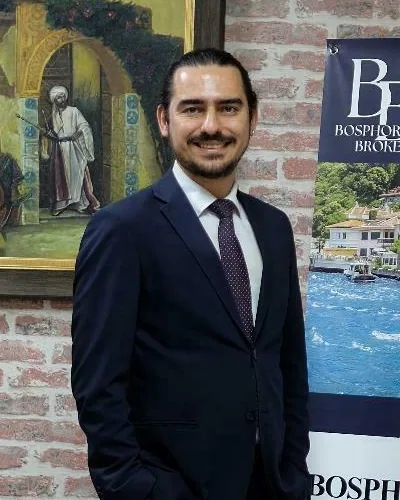
Burak Ünal
Turkish Real Estate Broker - License no. 3408704
Burak Ünal is a licensed real estate broker in Turkey (license no. 3408704) who advises Turkish and international clients on buying, selling and renting property, including property purchases for Turkish citizenship by investment, through his registered sole proprietorship trading as Bosphorus Brokers. He holds an MSc in Finance from the London School of Economics (2019) and a BSc in Business Management from Boğaziçi University (2016), and passed Turkey's official real estate broker licensing exam in 2021. A Chevening scholar and a Congress Member of Galatasaray Sports Club, he advises clients in English (IELTS 8.0), Turkish and French.


